
Your day starts with four emails requesting you to schedule new events. This day is looking busy already. Then, the phone rings...can you change the number of chairs needed for the Friday event in the Student Center? The phone rings again before you've even had time to look at all those emails or make a note about that phone call. You wish you had a lot more time—or you need to update and upgrade your scheduling system.
CollegeNET understands how complex it can be to balance academic and event scheduling needs and juggle locations and requests, because we've been doing this since the days of paper scheduling, through the time of trying to schedule with spreadsheets, and we've seen the inadequate and inefficient systems offered elsewhere. We build Series25 tools with scheduling professionals like you to answer your needs.
How can you tell when you're ready to upgrade your scheduling process? Here are five common signs.
1. You're Not Getting the Support You Need
2. You Aren't Using Your Own Data to Make Your Job Easier
3. You Constantly Struggle to Enforce Scheduling Policies and Keep People Happy
4. Scheduling Changes Are Difficult to Track
5. Your Data Lives in Multiple Locations
5. Your Data Lives in Multiple Locations
You receive a request because the requester forgot to add catering to their event. You can't remember if you need to change that in the separate catering software or also in the scheduling system. If your data is scattered across various systems in different formats, it can make your job less efficient with:
-
No single source of truth, creating constant questions about which data is up-to-date
-
Wasted time and money with manual uploads of data to different systems and extra checking to see which data needs to be in sync
-
Possible errors when you're entering data into multiple systems and documents.
Series25 provides a single database for institution-wide visibility, automated sync between your SIS and scheduling systems, and a robust Web Services API to keep separate systems updated. Learn more about how a streamlined data collection process is essential for creating a reliable schedule and reducing mistakes.
4. Scheduling Changes Are Difficult to Track

You have to find space for a class that has to change locations, because a large event is outgrowing its booked spaces. You basically have to "hack" your own systems to get up-to-date availability of spaces or do frequent manual uploads to try to keep the data in sync with your SIS. You're the one who has to make sure requests are never misplaced. You have no centralized change log to keep track of who requests which change when. The faculty and staff end up asking you about everything because you've got no way to let them track the status of their own requests. All these changes feel like frustrating chaos.
You need a centralized system that syncs with your SIS and third-party tools automatically. Series25 can help with features like:
- Academic Priority and meeting pattern tools to help academic schedulers deal with changes efficiently while maintaining stability for your faculty, students, and registrar's office staff members
- Event/course audit logs to track changes and know who did what and when
- The ability to handle complex event workflows like no one else, using tiered tasks, email templates, automatic communication scenarios, and scheduled reports
3. You Constantly Struggle to Enforce Scheduling Policies and Keep People Happy
Whether you're an academic scheduler or an event planning professional, some days can feel like everyone wants something from you, and you feel like you have to keep them all happy. There's just not enough time in the day to enforce institutional policies and balance everyone's needs. With more manual systems:
- Courses can get packed together into prime time hours, meaning you're not utilizing all your spaces effectively.
- Communication can break down between event requestors, resource and service providers, and space owners.
The result is a heavy burden on the registrar's office and harried events staff, and policy violations that you might be expected to fix.
A centralized scheduling tool, like Series25, helps by automatically enforcing these policies, proactively flagging violations before they become problems. Using an effective suite of tools allows you to:
- Utilize a dependable, fast academic optimizer that allows you to run scenarios quickly, get feedback right away, make changes, and run schedules again to make sure sections are in the right places with the right faculty preferences while utilizing space effectively
- Push information to requestors, and allow them to pull info themselves when they need it, keeping them happy while saving you time and trouble
- Build productive workflows with tiers that make sure event management happens in the right order, with everything done
- Save countless hours sending automated emails for event confirmations, service provider notifications, and more, using custom, branded templates
- Provide automated reports to keep administrators, space owners, and other stakeholders informed
- Give students, faculty, staff, and external users self-service tools for submitting requests, approvals, and making authorized changes
Series25 provides practical solutions for real college and university scheduling challenges. Read more.
2. You Aren't Using Your Own Data to Make Your Job Easier
Have you ever entered the same data into more than one system and into more than one document? We've all had to do it. With events in one place, you can leverage that data multiple times. You will produce calendars, reports, and invoices, all from the same reliable database. You can rely on one source of truth to do more work faster.
A modern, unified system like Series25 lets you make your job easier with features such as:
- Automated, accurate pricing formula calculations that make billing and invoicing faster and easier with options for discounts, late fees, and reminders
- Management of automated door locking/unlocking, HVAC, and other automated processes based on scheduling data to save money for your institution
- Powerful standard and custom reporting with analytics options that can increase fill rates, satisfy student demand, and utilize historical enrollment data for better planning.
- Unlimited calendars published to multiple websites that keep your community informed
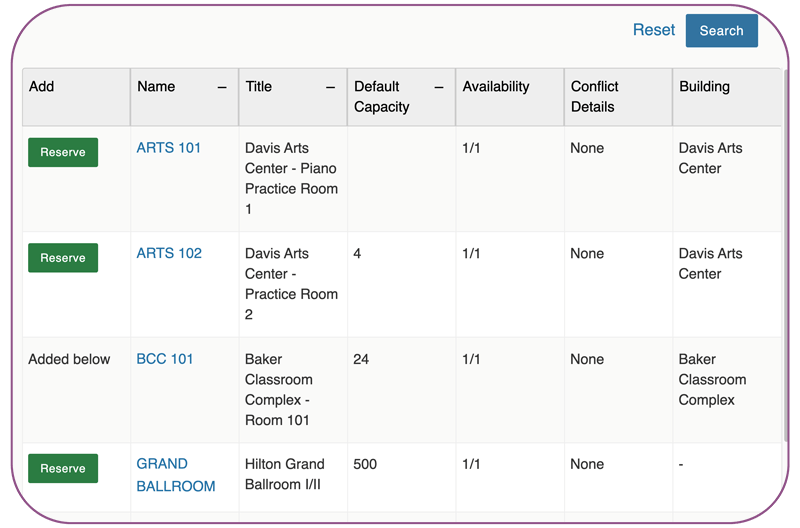
See what features a modern scheduling system can offer.
1. You're Not Getting the Support You Need
It's hard to feel like you're the one doing it all without a support system. Even with some scheduling vendors, you might reach out for support and not get the answers you need. If you experience:
- Feeling like you have to support multiple systems all at once
- Reaching out, then getting robotic messages in return that feel like no one really read or understood your email
- Software, like SIS integration, that was built to be "good enough" and never improved
You need a partner that responds with real people who listen to what you need, and do their best to help you find a solution. CollegeNET prides itself on:
- Staffing support professionals with college and university scheduling experience who know the products, know your issues, and care about helping you
- Helping you set up every aspect of your system to make sure you have everything you need
- Constant software iteration to improve your scheduling tools in response to SIS changes, higher education scheduling trends, and your direct feedback
- Giving you a voice in making sure your setup and your software are helping you be more efficient
You have partners at CollegeNET with Series25. Learn more about what excellent support feels like.
Time for an Upgrade? How Centralized Scheduling Can Help
Want to make every workday better? Then, you need to eliminate having your data live in multiple locations, dreading dealing with changes, balancing everyone's happiness, and not letting your scheduling data work for you. Most importantly, you need to stop doing it all by yourself without support.

CollegeNET offers Series25, a modern, centralized scheduling solution, an answer to all of these problems. We're ready to help you be more efficient, and we're interested in hearing about your challenges and how we can help.